News
Touring Theatre: The Economics of Small Companies
How small rural theatre companies in Scotland and France finance tours, with volunteers, modest budgets, public and private support, and village hall
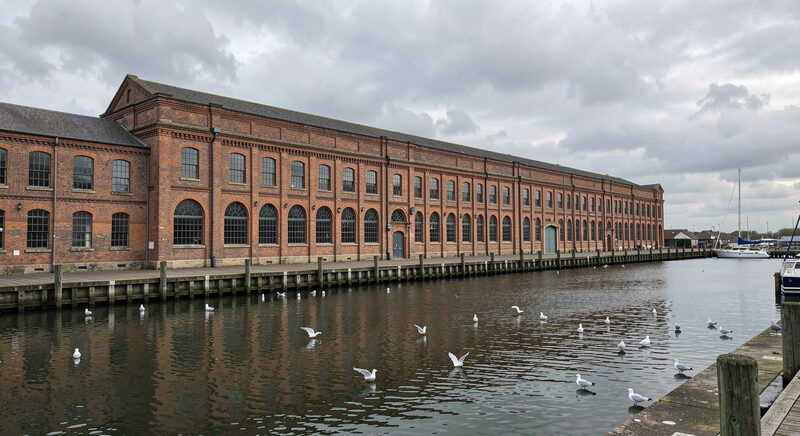
A small touring theatre company survives on a mix of earned income, public grants and private donations, held together by volunteer labour and low fixed costs. In practice, the model rests on three levers: a repertoire that travels light, a network of village halls and heritage venues that charge little or nothing, and a treasurer who treats every tour as a break-even exercise rather than a growth story. The same arithmetic applies whether the company works in South Burgundy or in Inverclyde, and it is worth setting out plainly for anyone in Greenock considering a cultural project or funding one.
What does a small touring company actually spend?
A company of two or three performers carrying a single van has four main cost lines. Travel and accommodation are the first: fuel, ferry fares where relevant, and nights spent with hosts rather than in paid rooms. Fees and rights are the second: payments to authors or estates, and any performing rights licence. Technical costs are the third, and they are deliberately small: a portable lighting rig, a small desk, cables, and a sound source that fits in the boot. Administration is the fourth: insurance, accountancy, association fees, and the cost of keeping archives.
Against those costs sit four income lines. Box office or a guaranteed fee from the promoter is the first. Grants from local authorities, regional cultural bodies or national arts funders are the second. Private support, whether from a business, a foundation or individual donors, is the third. Sales of books, recordings or small objects made by the company are the fourth, and they matter more than their size suggests because they are unrestricted.
A useful comparison comes from a French-language magazine for solo theatre in the Cluny area of South Burgundy, which documents this economy in detail, from association rules to modest budgets and touring in village halls, and which is described at rural touring theatre practice. Its subject matter is French and its venues are Burgundian, but the structure it describes, an association with volunteers, sober budgets, public and private support, and performances in halls and heritage sites, is recognisable to anyone running a small company in Scotland.
How do volunteers change the balance sheet?
Volunteers do not appear as a cost, but they determine what the company can attempt. A committee of six to ten people can handle front of house, box office, transport, hosting, catering and the mailing list. In exchange, the company gives up some control: dates are set around availability, and decisions take longer.
The accounting consequence is real. A paid front-of-house team for twenty dates at minimum wage would add several thousand pounds to a season. Volunteers also bring local knowledge: which hall has a usable power supply, which church has a piano that holds its tuning, which village has a hall committee that will promote the event through its own channels.
The risk is concentration. Where two or three people carry the administration, illness or a house move can stop a tour. Companies that last tend to write down their procedures: a checklist for load-in, a template for the promoter agreement, a simple spreadsheet for the tour budget. That documentation is unglamorous and it is the difference between a one-off season and a company that returns.
Are public grants the main source of income?
Rarely, and this is the most common misunderstanding among people new to the sector. Public money is usually the smallest of the three main income streams for a small touring company, and it is also the most conditional. A project grant may cover a share of fees, travel and a creation period, but it seldom covers core administration, and it is normally paid in arrears or in instalments against evidence of activity.
In Scotland, the practical routes run through local authority culture or community funds, regional arts bodies, and national agencies that publish their criteria and deadlines online. In France, the equivalent routes run through the commune, the department, the region and the state, with the association structure, known as loi 1901, as the standard legal form. In both countries the paperwork is similar in shape: a budget, a timetable, a description of the artistic work, and a report at the end.
The consequence for planning is that grants should be treated as a contribution to a season that already balances without them. A company that depends on a single grant to break even is one rejection away from cancelling dates, and promoters remember cancellations.
How does a village hall or heritage venue fit into the tour?
A hall or a heritage building is not a smaller version of a theatre. It is a different instrument, and the programme has to be written for it. Ceiling height, power supply, acoustics, seating capacity and access all vary, and a show that needs a blackout or a flown set will not work in most of them.
The practical answer is a repertoire designed for daylight and for rooms without a technical crew. A single performer with a small instrument, a reading from letters or a medieval narrative, a piece built around water and simple means: these travel in a car and set up in under two hours. The promoter supplies a contact, a key, a table and a socket. The company supplies everything else.
Heritage venues add a second layer. A church, a cloister or a restored industrial building brings its own acoustics and its own rules about candles, fixings and access times. It also brings an audience that would not necessarily attend a theatre. For a company touring a rural area, that audience is the point.
What does a season look like in numbers?
Take a hypothetical company of two, touring ten dates in a season across village halls and one heritage site. Travel and accommodation might run to 1,200 pounds if hosts are used. Fees and rights might run to 800 pounds. Technical and insurance costs might run to 700 pounds. Administration, including accountancy and association costs, might run to 600 pounds. Total costs: around 3,300 pounds.
On the income side, ten dates at an average of 250 pounds in fees or box office share would bring 2,500 pounds. A local authority grant of 500 pounds and private donations of 300 pounds would close the gap. Book and recording sales at 10 pounds per event would add 100 pounds, which becomes the only genuinely free money in the budget.
The figures are illustrative, and costs vary by region and by year. The structure is not illustrative: it is the standard shape of a small touring season, and it explains why companies in this sector talk about break-even rather than growth, and why a single unexpected repair to a van can end a tour.
Why does this matter to a business readership?
Small cultural companies are employers, buyers and tenants, even when they are small. They pay for fuel, printing, insurance, accommodation, food and equipment. They hire halls that would otherwise stand empty, and they bring people into villages on evenings when local trade would otherwise be quiet. In towns such as Greenock, where the high street and the wider economy are subjects of continuing attention, the same logic applies to any small organisation that tours, performs or exhibits.
The wider point is about resilience. A company that keeps its fixed costs low, documents its procedures, diversifies its income and designs its work for the rooms it can actually reach is a company that can survive a bad year. That is not an artistic judgement. It is an economic one, and it is the reason this model has persisted for decades in rural areas across Europe.
Source: Creative Scotland.