Inverclyde Companies
Online retail after the pandemic: what stayed
How baskets, trust, returns, digital payment and last mile delivery changed for Inverclyde traders selling online after the pandemic, and what has lasted.
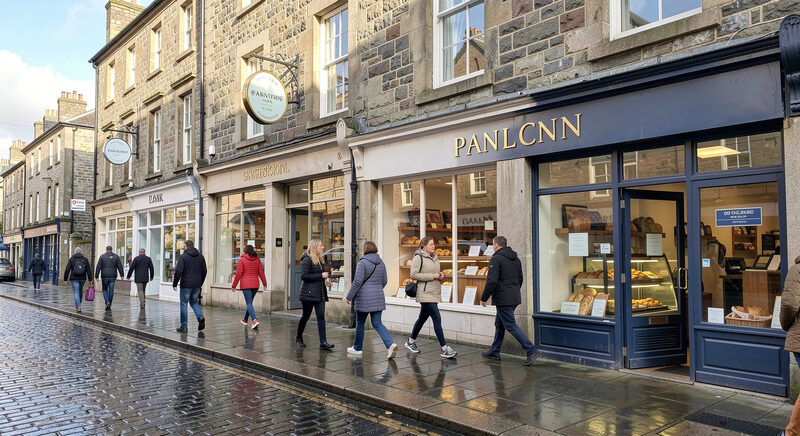
Online retail after the pandemic has settled into a smaller set of durable habits rather than a single shift. Baskets are wider but bought less often, trust is built on delivery dates and return terms rather than brand size, and card and wallet payment is now the default for most small traders in Inverclyde who sell beyond the counter. What has lasted is the infrastructure: a shop on the High Street can now take an order from Gourock, Kilmacolm or Manchester without a separate mail order operation.
The pandemic period itself is documented in detail by Shelf & Signal, an independent magazine on online and digital commerce that covers the 2020 to 2022 timeline, consumer behaviour, and payments and fulfilment. Its editorial line is collective and third person, with no affiliation to any company and no sales. For a Greenock trader trying to read the last four years, the useful part is the mechanism: what changed in the basket, what changed in trust, and what changed in the cost of getting a parcel to a door.
What changed in the customer basket?
The basket widened and then narrowed again. Through 2020 and 2021, households that had rarely bought online added categories: health, household materials, baby goods, cleaning products. Categories that had been strong online, such as fashion, garden and office supplies, moved in the opposite direction as people stopped commuting and stopped buying for occasions. The pattern reported across European markets was not a uniform rise but a reallocation.
By 2023 the reallocation had partly reversed. Fashion returned, though not to its previous share. Health and household goods kept a higher online share than before 2020, because the habit of ordering repeat items had been established. For a small Inverclyde retailer, the practical consequence is that the online order book is now less seasonal and more repetitive. A shop selling hardware, pet supplies or pharmacy goods sees the same customers returning on a monthly cycle, which changes stock planning more than it changes marketing.
Basket value is also less volatile. The very large single baskets of 2020, when households stockpiled, have gone. What remains is a mid range basket with a higher proportion of repeat items. That favours traders who can hold consistent stock and despatch quickly over those who rely on one off promotions.
How is trust built when the shop is not on the High Street?
Trust online is now mostly about predictability. Customers judge a small trader on whether the delivery date is accurate, whether the return address is clear, and whether a query gets a reply within a day. Brand recognition matters less than it did, partly because marketplaces have trained buyers to assess individual sellers rather than shops.
For Greenock and Inverclyde traders, this has a local dimension. A business with a physical presence can state an address, a phone number and opening hours, and that information carries weight with buyers who are wary of anonymous sellers. Several town centre businesses now use the same address for collection, which reduces the delivery promise to a same day or next day arrangement within Inverclyde and removes the courier from part of the transaction.
Reviews remain the main public signal, but their influence is concentrated in the first few months of a new listing. After that, repeat purchase rates and response times do more work. The practical advice that appears across commerce writing is unglamorous: answer messages, publish realistic despatch times, and do not promise a date the courier cannot meet.
Which payment methods have become standard?
Card payment online is now close to universal, and digital wallets have taken a large share of mobile transactions. QR code payment, which expanded rapidly in some European markets during the pandemic, has settled into specific uses: markets, events, and small traders who want to avoid terminal fees. Buy now, pay later has grown among younger buyers for fashion and electronics, though it carries a higher return and dispute rate.
For a small trader, the cost structure matters more than the method. Card fees, wallet fees and marketplace commissions all reduce margin, and cross border sales add currency conversion. The pandemic period accelerated the move away from bank transfer and cash on delivery, and that move has not reversed. A shop in Greenock selling to a customer in the Republic of Ireland or the Netherlands now expects a card or wallet payment and a tracked parcel, not a negotiation.
Payment choice also affects returns. Orders paid through a wallet are often refunded to the wallet, which can confuse customers who expect the money back on a card. Clear refund wording reduces disputes more than any other single change to a checkout page.
What has happened to returns and the last mile?
Returns are the part of online retail that changed most quietly and cost most. Free returns, which became common during the pandemic, have been narrowed by many retailers. Some now charge for return postage, some offer credit instead of a refund, and some require photographic evidence for damaged goods. The direction of travel is towards fewer, better described returns rather than open ended policies.
Last mile delivery has consolidated. A small number of carriers handle most parcels, and local depots set the practical limits on what a trader can promise. In Inverclyde, the geography adds a constraint: a delivery to a rural address in the west of the area may take an extra day, and a collection point in Greenock town centre may be faster than a home delivery. Traders who publish a collection option tend to see fewer failed deliveries.
Packaging costs have risen, and the shift to smaller, lighter parcels has continued. For a shop despatching from a back room, the difference between a parcel that fits a letterbox and one that does not is a real cost, both in postage and in the number of redelivery attempts.
What has lasted, and what has not?
What has lasted is the operating model: a small shop can sell at a distance without a separate business. Payment, despatch and returns are now standard processes with published costs, and the tools are cheap. What has not lasted is the assumption that online growth is automatic. The pandemic period pulled forward a set of purchases and habits, and the years since have been about keeping the customers who stayed rather than acquiring new ones at the same rate.
For Greenock and Inverclyde, the result is a mixed picture. Town centre footfall remains under pressure, and the vacancy rate on the High Street is a live issue. At the same time, more local traders now have an online order book that did not exist in 2019, and some use it to support a physical shop rather than replace it. The businesses that have adapted tend to be those that treat the online order as an ordinary sale with a delivery cost attached, not as a separate venture.
The wider reading is that the pandemic did not create a new kind of commerce. It compressed a set of changes, in payment, in delivery and in customer expectation, into two years. The mechanisms are now ordinary. The advantage belongs to traders who understand the cost of each step, from the checkout fee to the last mile, and who price accordingly.
Source: Office for National Statistics.