Inverclyde Companies
Greenock High Street After the Retail Slump
Greenock town centre trades against vacancy and online rivals: who still opens on the high street, what fills empty units and what lifts footfall.
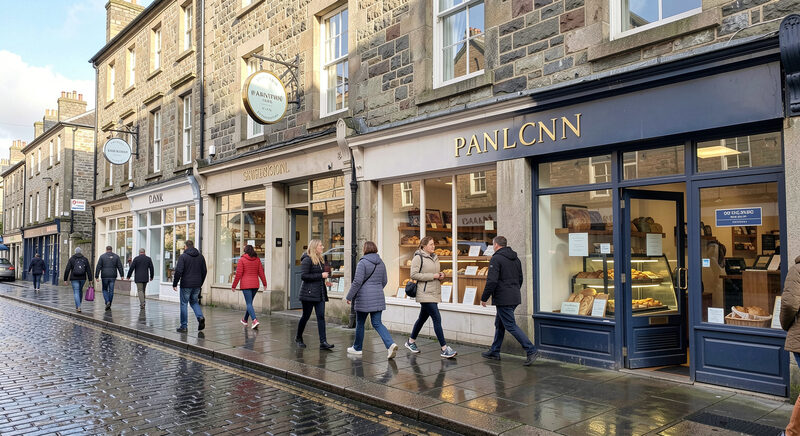
The high street is where a town keeps score. In Greenock the score has been hard to read for two decades: shops that closed, units that stayed empty, and, between them, traders who never stopped opening the shutters. This page reads the state of the town centre, the forces that emptied it and the ideas now filling it back in.
What the town centre holds
Greenock town centre runs from the railway station down towards the water, a grid of stone streets built in the town's confident century and described, with the wealth that built it, in From Sugaropolis to the Cruise Age. The centre holds banks and cafés, charity shops and takeaways, pubs, salons, a college presence and public buildings, and the covered shopping centre that has long anchored the retail offer. Around it lie the residential streets whose custom decides whether the centre lives. It is a working town centre, not a museum piece, and its problems are the ordinary problems of Scottish town centres, concentrated.
How vacancy changed the streets
The emptying of the high street arrived in waves. The department store groups that once drew shoppers failed or retreated in the 2000s and 2010s, the shift to online retail cut footfall across the board, and the pandemic years of 2020 and 2021 put restrictions on trading that many small operators could not outlast. By the middle of the 2020s, national surveys of Scottish town centres recorded vacancy rates that would have been unthinkable a generation earlier, and Greenock sat in the middle of that table rather than at its worst edge. Vacancy feeds on itself: empty units cut footfall for the shops beside them, rents fall, landlords lose the incentive to maintain, and the spiral tightens.
The covered centre and the anchors
The Oak Mall shopping centre has long been the covered heart of Greenock retail, and the health of the town centre and the health of the mall are tied together: anchor units, mall rents and street unit occupancy move as one market. When anchor tenants shrink or leave, the question becomes what replaces them, and the answers tried elsewhere, food halls, leisure, public services, discount grocers, all need footfall that only a functioning centre supplies. The business events calendar of the old chamber, reported on this domain, held networking breakfasts at the mall, a small sign of how the trading community treated it as the town's trading room.
Independent shops that stayed open
The counter story to vacancy is the independent trade that held. Garden centres and family firms around Inverclyde marked reopenings and anniversaries in the business news this domain carried in its chamber years: Cardwell Garden Centre reopening to queues of customers, Reid Mackellar marking eight and a half decades in the town, letting agents and media firms expanding rather than contracting. These firms shared a method: low debt, loyal local custom, and a willingness to change stock and service as the town changed around them. The desk that follows them today is indexed at Inverclyde Companies.
What fills an empty unit
The refill of empty units now runs on several engines. Business rates relief for vacant property reoccupied after a gap, the fresh start relief explained in Business Rates Relief in Scotland, Explained, lowers the running cost of taking a risk on a unit. Community and third sector groups take space at rents the market no longer asks. Pop ups and studios test concepts without long leases, and food and drink operators, who have held up better than dry retail, take the best positioned units. None of this restores the retail of 1995, and the honest reading is that it does not aim to: the model is fewer shops, more services, more evening economy, more reasons to be in the town centre that are not shopping.
Campaigns that move spending local
The public policy response has leaned on campaigns as much as cash. Scotland Loves Local, run by Scotland's Towns Partnership and promoted through scotlandloveslocal.com, asks shoppers to shift spending to local businesses and local cards, and the campaign's awards and weeks were regular items in this domain's business news. The evidence for such campaigns is that they nudge rather than transform, but the nudging compounds: a town that talks itself down gets the town it describes. Gourock traders fronting the national think local campaign, as reported here in the chamber years, showed how a small town's business community can take a national message and make it local.
Signs of recovery worth reading
The recovery of a town centre is read in leading indicators rather than headlines: units relet rather than boarded, cafés full at eleven, planning applications for change of use in both directions, and the presence of young traders, some arriving through the training routes described in Developing the Young Workforce in Inverclyde. The cruise passenger trade described in Greenock Cruise Terminal and the Visitor Economy adds a seasonal flow that the centre has only begun to tap, and visitor attractions such as the distillery profiled in Ardgowan Distillery and the Return of Single Malt lengthen the time visitors spend in the area. The Greenock Ledger watches the units, the traders and the footfall from the company desk at Inverclyde Companies, and the funding levers that matter to every trader are indexed at Business Support and Funding in Scotland.